The latest branch in Cornwall to benefit from infrastructure upgrades for the Cornish Metro is the 20-mile Par to Newquay line. Craig Munday highlights the changes.
The railways of Cornwall have seen considerable investment in recent years. Mechanical signalling equipment dating back to the prewar era was swept away on the main line between Largin and Penwithers Jn when Truro, Par and Lostwithiel ’boxes were closed in 2023, with control passed over to Exeter.
The anticipated Cornwall Metro scheme is ambitious: to link the major towns and city of Cornwall – Newquay, St Austell and Truro – with a metro-style service. Falmouth too has a growing population, and students from Falmouth University have been reliant on the popular half-hourly timetable on the Truro to Falmouth Docks line since 2009. The eventual plan is to see an hourly service on the Newquay to Falmouth spine, bringing the Newquay line up to a much better standard of service rather than the current bi-hourly departures from Newquay.
From the history of steam through to 21st century rail transport news, we have titles that cater for all rail enthusiasts. Covering diesels, modelling, steam and modern railways, check out our range of magazines and fantastic subscription offers.
To achieve this, the signalling system on the Newquay branch has been heavily invested in, while retaining its semaphore signalling installations at both St Blazey and Goonbarrow. In addition to the upgrade, trackwork is being provided in the shape of a passing loop on Gossmoor, beside the A30 trunk road. An extra platform is also being reopened at Newquay. Paradoxically, these replace infrastructure in both areas that was existent until the mid-1980s when both St Dennis Jn and Newquay ’boxes closed in 1987.
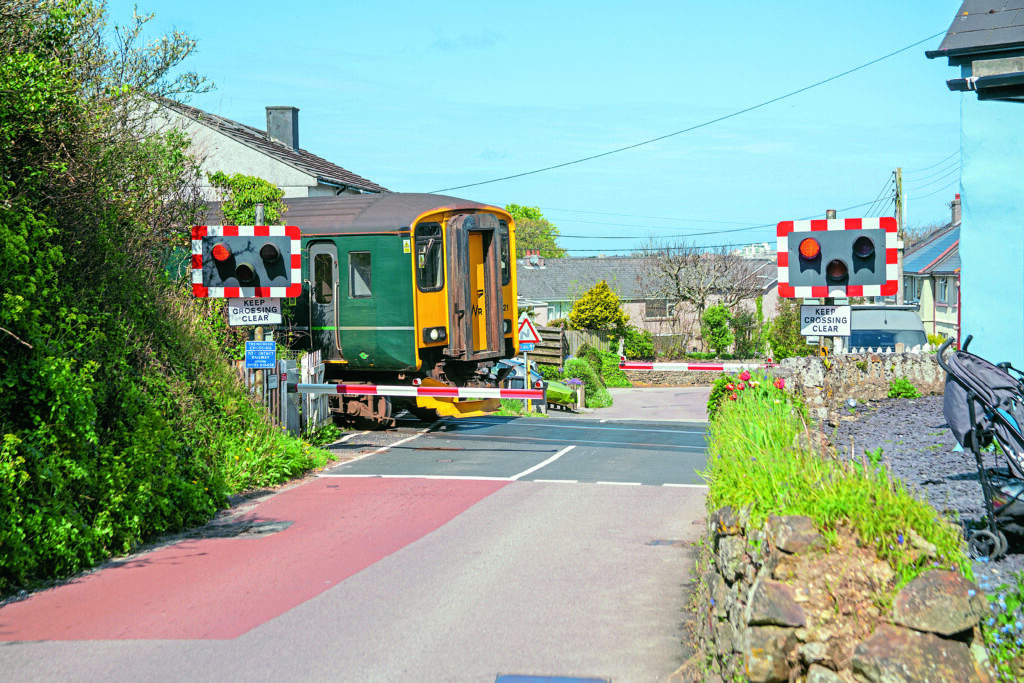
The Newquay line is slow in comparison with other branch lines in the Duchy due to the switchback nature of the curvature and plethora of level crossings between Bugle and the resort; these level crossings have a variety of operating methods.
Eagle-eyed passengers will identify the many cottages along the line that once housed resident crossing keepers. These employees lived in premises adjacent to the many crossings that dissect the single track, and a bell or telegraph system alerted them to attend the crossing gates for approaching trains.
During the 1970s, many of these gated crossings were replaced with basic automatic crossings fitted with wigwag lights but no barriers (AOCL crossing), the approaching train driver being responsible for ensuring the crossing was safe by obeying a flashing white light signal. Over time, many of the mainly rural crossings were upgraded with half barriers.
There are also many accommodation and occupation vehicular user-worked crossings along the line. The user called the signaller at Goonbarrow by telephone for permission to cross. With basic train detection along the line up until now, estimating the passage of the train has not been optimal for allowing users to cross. Miniature red and green crossing lights (MSLs) are a welcome addition to the crossings with most usage.
New equipment
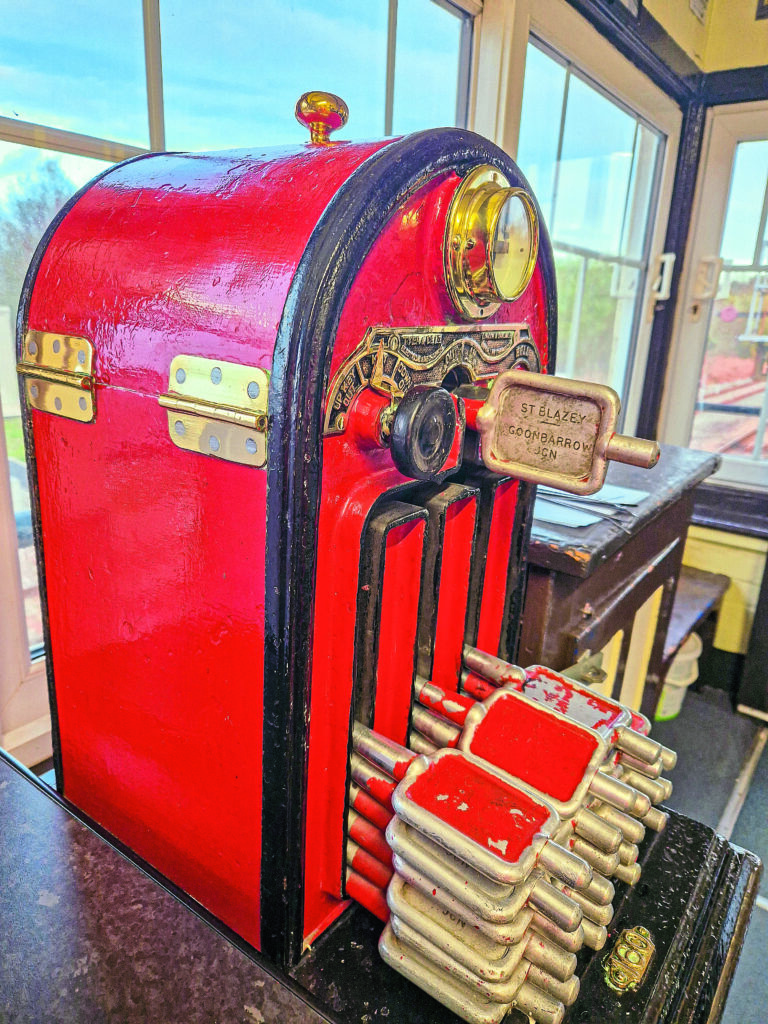
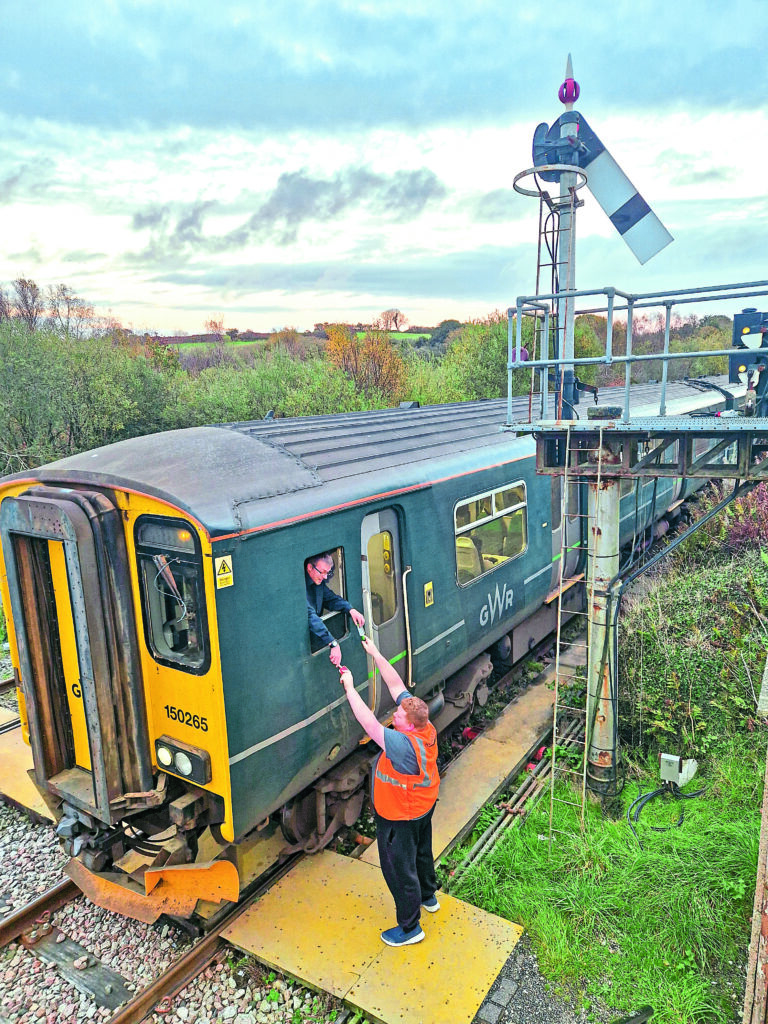
The major alteration to signalling trains along the Newquay branch will be the withdrawal of the Electric Token (ET) and One Train Working (OTW) train staff. Until November 7, trains departing Par ran around the sharp 180-degree curve to St Blazey, where it collected the ET from the signaller.
This metal key was the authority to proceed to Goonbarrow Junction. This section was unique to the Western Route, as it was the last ET system between two signalboxes left in operation. Both ’boxes had the impressive Tyre and Co Ltd red ‘pillar box’ token machines, and each had suites cut in them which held multiple tokens. With a cooperative release, a token could be withdrawn at either end. Multiple tokens allowed trains to follow in the same direction along the line, which was common with a clay train following a passenger service once the token had been put back in at the opposing end.
The train then paused at the ’box steps at Goonbarrow Junction to surrender the red ET and was given the green OTW token, which was authority to proceed through to the buffers at the single-end platform at Newquay.
Interestingly, although the line to Newquay is governed by a ‘train staff,’ it is the same design as the ET. Until 1987, the line was signalled by the ET system to Newquay. When the ’box closed and the line was one-train only, the token machine was retained at Goonbarrow as it was electrically locked with Newquay-bound section signal G24.
Great care was needed to be taken by all, particularly when trains passed each other in summer, that the correct token was given to the appropriate driver. A simple mistake could see a Newquay-bound train disappear with the St Blazey ET. This mechanical system has been replaced with new axle counters from the level crossing at St Blazey Bridge level crossing through to Newquay. The lines are controlled by Goonbarrow throughout with a slot arrangement for the signaller there to allow the section signal at St Blazey to be cleared for a Down train.
A new loop
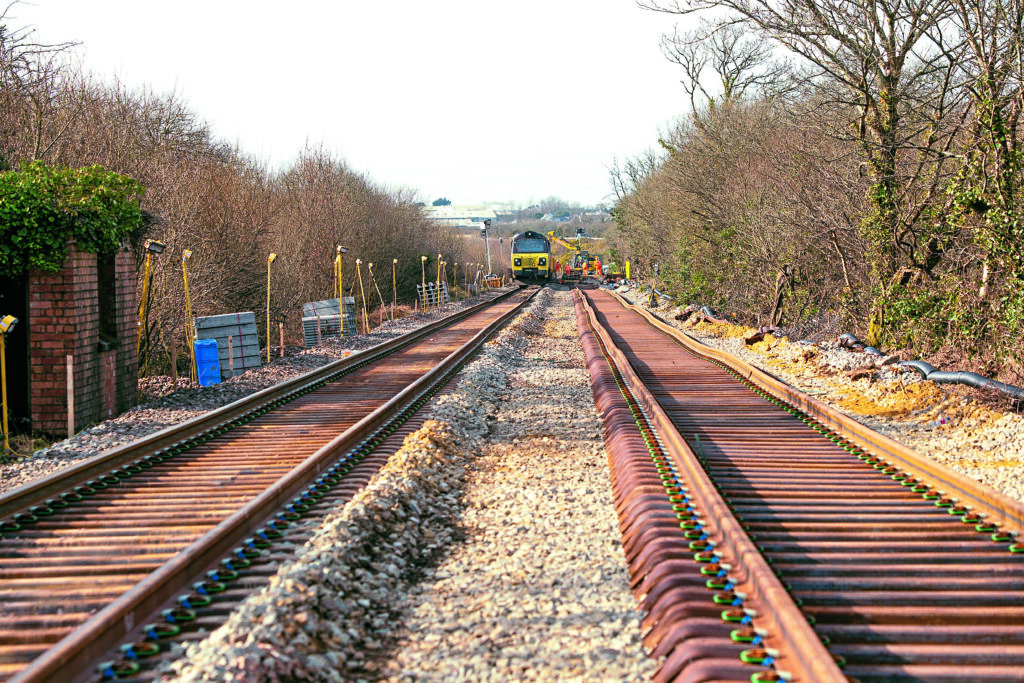
Along the line to Newquay, a 400m new passing loop will be provided at Gossmoor, between St Columb Road and Quintrell Downs. When the hourly service commences this year, trains will pass here, rather than at the existing loop at Goonbarrow, due to the timetable.
Points and signals are controlled from a new panel at Goonbarrow Junction. It has not been customary for a ’box to share both levers for mechanical signalling and panels in recent schemes. However, many of the 25 levers at Goonbarrow are still in use and an additional means of controlling the new infrastructure was required. This panel sits alongside the levers for the mechanical points and semaphores, remarkably, that will remain controlling the area adjacent to the signalbox.
The development of the new town called Nansledan has seen the population of Newquay surge. This town has been built on former farmland between Quintrell Downs and Newquay and has changed the landscape considerably in the last 15 years. A new road-over-rail bridge has provided an improved link between the busy A392 road and the new town.
This presented an ideal opportunity to downgrade two nearby level crossings from vehicular to bridleway only at Chapel and Trencreek. These were becoming rat runs for locals and sat-nav-using tourists along the narrow lanes, making life difficult for residents living nearby and, of course, increasing traffic.
On the final leg of the journey into the terminus, a two-aspect distant and stop signal stand guard over the station throat, the stop signal guiding the train into either Platform 1 or 2 at Newquay. The original full-length platform will provide additional capacity for special trains and events and will also be useful for late running. The new platform will hold a four-car DMU (typically Class 150s) and become the regular platform of use. It was not considered necessary to provide an additional full-length platform due to constraints with the original prefabricated design partway along it.
The scheme will bring considerable safety and performance improvements to the line. It has been largely felt that Newquay’s transport links were inadequate for such an important town. Like Okehampton and Falmouth, it is anticipated that more frequent trains will encourage locals and visitors to use the train, removing traffic from the congested car parks and streets of the resort.
For the railway staff along the line, trains will run without stopping twice for the ET/OTW exchange, so the signallers will miss their brief chat with their GWR and freight colleagues as the tokens were exchanged!
This article first appeared in Railways Illustrated Magazine. To subscribe for more great news and features please visit HERE